
You’re sitting down after a long day, finally ready to relax—when you hear it. Crunch. Then another. And another. Your heart sinks. You turn the corner… and there he is. Your sweet, goofy, tail-wagging best friend… chewing your favorite leather sofa like it’s a chew toy. Again.
If you’ve ever stared in horror at shredded shoes, gnawed-through coffee tables, or a ruined pair of sneakers that cost more than your dog’s annual vet bill—you’re not alone. And you’re definitely not a bad pet parent. This isn’t about discipline. It’s about understanding.
Dogs chew. It’s natural. But when that chewing targets your belongings, it’s not just frustrating—it’s expensive, stressful, and can even damage your bond with your pup. The good news? You don’t need to yell, punish, or buy a dozen deterrent sprays that don’t work. With the right approach, you can stop your dog from chewing furniture and shoes—without breaking your spirit (or your budget).
In this guide, you’ll learn the real reasons your dog chews (it’s not spite!), how to identify the root cause behind the destruction, and simple, science-backed strategies that actually work. We’ll walk through practical solutions you can start today—no training degrees required. Plus, you’ll discover how to redirect your dog’s energy into healthy habits that keep both your home and your pup happy.
Let’s turn those chewed-up couch legs into cozy napping spots—and your shoes back into something you can actually wear.
Why Does My Dog Chew My Stuff? (It’s Not What You Think)
Most pet parents assume their dog chews furniture out of rebellion. “He knows it’s wrong,” you think. “He’s just doing it to get back at me.” But here’s the truth: dogs don’t hold grudges. They don’t plan revenge. If your pup is chewing your shoes, it’s not because he’s mad you left for work. It’s because he’s bored, anxious, teething, or simply… didn’t know better.
Let’s break it down.
Puppies chew because their teeth are growing. Just like human babies drool and bite teething rings, puppies explore the world with their mouths. Their gums are sore, and chewing relieves pressure. If you’ve ever had a 4-month-old golden retriever shred your favorite slippers, now you know why.
Adult dogs chew for different reasons—often emotional ones. Separation anxiety is a huge culprit. When left alone, some dogs panic. Chewing releases endorphins—their version of self-soothing. Think of it like a person biting their nails when stressed. It’s not malicious. It’s survival.
Then there’s boredom. Dogs are intelligent, active creatures. If they’re not mentally or physically stimulated, they’ll find their own entertainment. Your couch? It’s soft. Your shoes? They smell like you. To your dog, that’s a treasure trove.
And let’s not forget: some breeds are just more prone to chewing. Terriers, hounds, and herding dogs were bred to work, chew, and problem-solve. Without outlets, they’ll create their own.
So before you yell, pause. Ask yourself: Is my dog anxious? Tired? Under-stimulated?
Understanding the “why” is the first step to fixing the “what.” Punishment doesn’t teach. It only teaches fear. And fear doesn’t stop chewing—it just makes your dog sneakier.
The Shoe Problem: Why Do They Always Go for the Footwear?
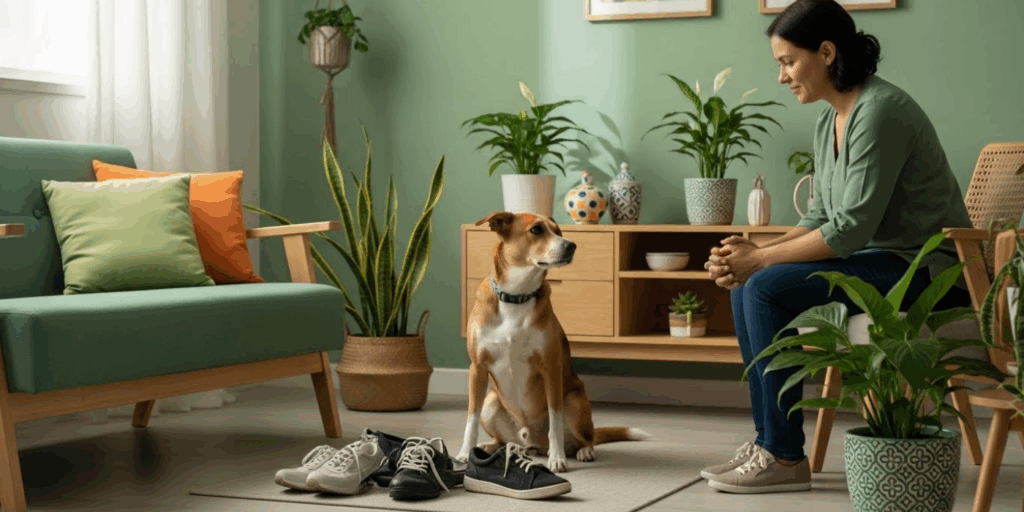
Let’s be honest: your shoes are basically dog magnets.
They’re portable. They smell intensely like you—your sweat, your scent, your daily routine. To your dog, that’s a comforting, irresistible lure. It’s like a warm blanket with your perfume on it.
Plus, shoes are often left near the door—right where your dog watches you leave. That’s the epicenter of separation anxiety. When you walk out, your dog feels the loss. The shoe? It’s the last thing that held your scent. So he chews it. Not to hurt you. To feel close to you.
I once worked with a client named Lisa and her 2-year-old Border Collie, Milo. Every time Lisa left for her office job, Milo would drag her work boots into the living room and chew them to shreds. She thought he hated her job. Turns out? He missed her. The boots were his emotional anchor.
Here’s what worked: Lisa started leaving a worn-out T-shirt (not a shoe!) on the floor before she left. She’d put it near his bed. It carried her scent, but it wasn’t valuable or tempting to chew. Within two weeks, the shoe-chewing stopped. Why? Milo no longer needed to “hold onto” her scent—he had a safe, acceptable alternative.
Pro Tip: Rotate your dog’s toys and rotate your scent items too. Keep shoes in closed closets or cubbies. Don’t leave them lying around like free snacks.
And here’s a game-changer: freeze your dog’s favorite chew toy. Yes, really. The cold numbs gums and satisfies the urge to chew—especially for teething pups or dogs with oral compulsions. Just pop a rubber toy in the freezer for 30 minutes. Watch the magic.
Redirect, Don’t Restrict: How to Give Your Dog Better Options
Here’s the secret most trainers won’t tell you: you can’t stop chewing. You can only redirect it.
Imagine telling a toddler, “Don’t touch the stove.” But never giving them a toy to hold. That’s what we do to dogs when we just say “no” to chewing.
The solution? Offer better choices.
Start by stocking up on high-value chew toys. Not just any toy. Look for durable, textured, and scent-infused options. Kong toys stuffed with peanut butter (xylitol-free!) and frozen. Nylabones designed for aggressive chewers. Rope toys for tug-and-chew combos. Puzzle feeders that turn mealtime into a mental workout.
But here’s the catch: your dog needs to want these toys more than your furniture.
So make them exciting.
Try this daily ritual:
- Take your dog’s favorite toy.
- Rub it with a little bit of chicken broth or tuna juice (low-sodium).
- Freeze it for 20 minutes.
- Give it to him right before you leave the house.
Suddenly, your dog associates your departure with something amazing—not something scary. And over time, your couch becomes less interesting than his frozen, smelly, awesome toy.
Also, rotate toys weekly. Dogs get bored with the same thing. Put 3–4 toys away in a bin, then swap them out. Freshness = fascination.
And don’t underestimate the power of chew-safe alternatives. Rawhide? Avoid it—it’s a choking hazard. Instead, try bully sticks, deer antlers, or Himalayan yak chews. All natural, long-lasting, and approved by vets.
One client, Dave, used to lose $200 a month in chewed-up furniture. He started giving his Lab, Duke, a new antler every Monday. Within a week, Duke ignored the coffee table. Why? Because the antler lasted longer, tasted better, and felt more satisfying than leather.
Your dog doesn’t need to be punished. He needs to be enthralled.
The Power of Routine: Structure Stops Chaos
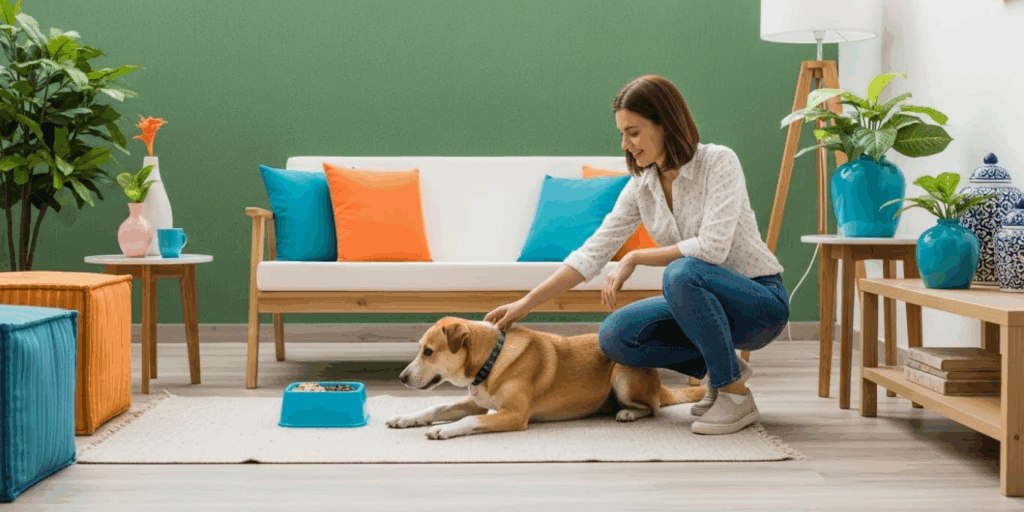
Dogs thrive on predictability. If your day is unpredictable, your dog will try to create order—by chewing your shoes.
Think about it: when you come home late, skip walks, feed at random times, or leave for hours without a plan—your dog feels out of control. Chewing becomes his way of coping.
The fix? Build a simple, consistent routine—even if you’re busy.
Here’s a sample day for a working dog owner:
- 7:00 AM: Quick walk + potty break
- 7:30 AM: Breakfast + stuffed Kong (frozen)
- 8:00 AM: Leave for work — leave TV/radio on for background noise
- 5:00 PM: Return home — 15-minute walk or play session
- 6:00 PM: Dinner + puzzle feeder
- 7:00 PM: Quiet time with gentle massage or grooming
- 9:00 PM: Bedtime with a calming chew toy
This isn’t about being perfect. It’s about creating safety. Your dog doesn’t need a schedule written in stone—he needs to know what to expect.
Studies show that dogs with consistent routines have lower cortisol levels (the stress hormone). Less stress = less destructive behavior.
And here’s a bonus: if you’re gone for long hours, consider a dog walker or doggy daycare twice a week. Even 30 minutes of social play can tire your dog out enough to prevent destructive chewing.
You don’t have to be a full-time dog parent. You just have to be a predictable one.
Training Isn’t a Chore—It’s Connection
You don’t need to enroll in obedience school to teach your dog “leave it.” But you do need to teach him what to do instead.
Start with the “Leave It” command. It’s simple, powerful, and works wonders.
How to teach “Leave It”:
- Hold a treat in your closed fist.
- Let your dog sniff and nudge your hand.
- When he stops trying and looks away—even for a second—say “Yes!” and give him a different treat from your other hand.
- Repeat 5–10 times daily.
Soon, your dog learns: When I ignore something, I get something better.
Now, apply it to your shoes. When you see him heading toward them, calmly say “Leave it,” then redirect him to his toy. Reward him immediately when he chooses the toy.
This isn’t punishment. It’s positive reinforcement. You’re not saying “no”—you’re saying, “Here’s something even better.”
And here’s a pro tip: never chase your dog when he’s got your shoe. That turns it into a game of “Catch Me If You Can.” Instead, stay calm. Offer a high-value treat or toy. He’ll drop the shoe to grab the better prize.
Most dogs will drop it—because they’re not stubborn. They’re smart. They just need to know what’s in it for them.
When to Call a Professional (And When to Keep Trying)
Sometimes, despite your best efforts, the chewing continues. That’s okay. It doesn’t mean you’ve failed. It means you might need a little extra support.
Signs you should consult a vet or certified dog trainer:
- Your dog chews nonstop—even when you’re home
- He destroys things only when alone (classic separation anxiety)
- He shows other signs of distress: pacing, whining, urinating indoors, or panting excessively
- He’s been chewing for months with no improvement
A vet can rule out medical issues—like pica (a condition where dogs eat non-food items due to nutritional deficiencies or gastrointestinal problems). A certified trainer can help design a behavior modification plan tailored to your dog’s personality.
But here’s the good news: 90% of chewing problems improve within 2–4 weeks with consistent redirection and routine. You don’t need a miracle. You need patience.
And remember: every dog is different. Your Chihuahua’s chewing habits won’t match your Great Dane’s. Adapt. Observe. Adjust.
One of my favorite stories? A 10-year-old rescue Greyhound named Luna. She’d chew everything—until someone realized she was deaf. The noise of chewing actually soothed her. We started giving her a vibrating massage pad and a stuffed Kong. Within days, the chewing vanished.
Sometimes, the answer isn’t in the behavior. It’s in the sensory experience.
A New Way to See Your Dog’s Chewing
Let me leave you with this: every chewed shoe, every gnawed leg, every shredded pillow… is a message.
It’s not a sign of disobedience. It’s a cry for connection.
Your dog isn’t trying to ruin your home. He’s trying to cope with a world that sometimes feels too big, too quiet, or too lonely.
When you respond with understanding instead of anger, you’re not just saving your furniture—you’re building trust.
You’re showing him: I see you. I hear you. I’m not going to leave you alone with your anxiety.
And that’s the real magic.
The moment your dog stops chewing your couch isn’t when you bought the right spray. It’s when he realized he didn’t need to chew anymore—because he felt safe.
So next time you catch him with your sneaker, take a breath. Don’t yell. Don’t grab. Just say, “Let’s find something better,” and offer him his favorite toy.
Watch how he looks at you—not with guilt, but with relief.
That’s the moment you both win.
Final Thoughts: You’ve Got This
Chewing isn’t a life sentence. It’s a phase. A behavior. A signal.
And you? You’re not a failure. You’re a learner.
You’ve now got the tools: understand the why, redirect with better options, build routine, train with kindness, and know when to ask for help.
Start small. Pick one strategy today. Maybe it’s freezing a toy. Or putting shoes in a closet. Or teaching “leave it” during snack time.
Celebrate tiny wins. Did he choose his toy over your shoe? High five. (Well, maybe a treat and a belly rub.)
Your dog doesn’t need perfection. He needs you—present, patient, and persistent.
And if you’ve tried everything and still feel stuck? Drop a comment below. Tell me your story. What’s your dog chewing? What’s worked? What hasn’t?
You’re not alone in this. And together, we can turn your home from a chew zone into a calm, joyful space—for you, and for your furry best friend.
Because the best furniture in the world? It’s the one your dog curls up on… without a single chew mark in sight.

Lucas Neto is a passionate animal enthusiast who has spent years learning, caring, and connecting with pets of all kinds. His fascination with animals began in childhood and grew into a lifelong dedication to understanding their behavior, needs, and unique personalities. Whether rescuing strays, supporting responsible pet care, or simply enjoying the everyday joy that animals bring, Lucas is committed to sharing his knowledge and love for pets with others.