Introduction
There’s nothing quite like the joyful tail wag of a dog who just nailed a new trick. Whether you’re lounging on the couch or spending a sunny afternoon in the backyard, teaching your dog simple, fun tricks is one of the best ways to strengthen your bond—while also giving them the mental stimulation they crave. Far from being just cute party tricks, these playful lessons can boost your dog’s confidence, sharpen their focus, and even help manage behavioral issues like boredom or anxiety.
In this article, you’ll discover easy, enjoyable tricks you can start teaching your dog today—no prior training experience needed! From classic commands with a twist to silly stunts that’ll make your friends laugh, each trick is designed to be simple, rewarding, and fun for both you and your pup. We’ll also share practical tips on timing, positive reinforcement, and how to keep your sessions engaging. Whether you have a bouncy puppy or a wise senior dog, there’s something here for every personality and skill level.
Get ready to turn everyday moments into playful learning opportunities—and maybe even discover a hidden talent in your furry friend!
Why Teaching Tricks Is More Than Just Fun and Games
At first glance, teaching your dog to “shake” or “spin” might seem like just a way to impress guests. But these tricks are actually powerful tools for your dog’s well-being. Dogs are natural learners—they thrive on structure, routine, and interaction. When you engage them in short, positive training sessions, you’re not only exercising their brain but also reinforcing communication between you two.
According to veterinary behaviorists, mental stimulation can be as tiring for dogs as physical exercise. A 10-minute trick session can leave your pup just as satisfied as a long walk—sometimes even more! This is especially helpful for high-energy breeds or dogs who can’t get outside due to weather or health reasons.
Moreover, trick training builds trust. Every time your dog successfully follows a cue and gets a treat, praise, or a belly rub, they associate you with positive outcomes. Over time, this strengthens your relationship and can even reduce anxiety or fear-based behaviors.
So, while your dog may be learning to “roll over,” you’re both building something deeper: a language of love, patience, and mutual understanding.
Trick #1: The Classic “Sit” – With a Playful Twist
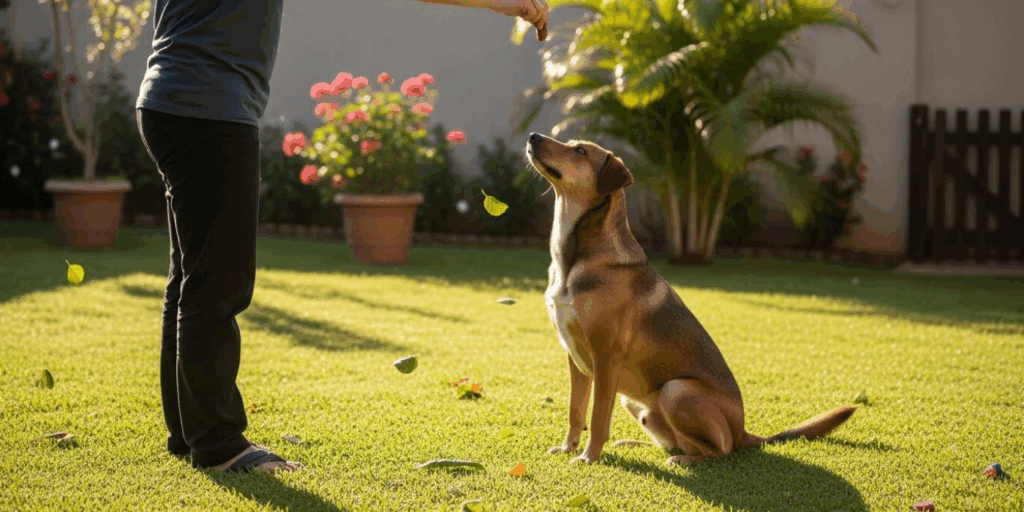
Let’s start with a foundational command that’s also the gateway to dozens of other tricks: “Sit.” You’ve probably taught this already—but have you turned it into a game?
Begin by holding a treat close to your dog’s nose. Slowly move it upward, causing their head to follow the treat and their bottom to lower. The moment they sit, say “Yes!” or click your clicker (if you use one), and reward them immediately.
Once your dog reliably sits on cue, spice it up! Try asking for a sit before mealtime, before tossing a ball, or even while you’re brushing your teeth. This turns a basic command into a polite habit—and it’s surprisingly fun to watch your dog “ask” for things by sitting.
Pro tip: Add a hand signal! Dogs often respond better to visual cues than verbal ones. A flat palm raised upward becomes your universal “sit” signal—great for noisy environments or silent commands at the dog park.
Before you know it, your dog won’t just sit—they’ll sit with style, speed, and anticipation. And that’s your first step toward more advanced tricks!
Trick #2: “Shake” or “Give Paw” – A Social Superstar Move
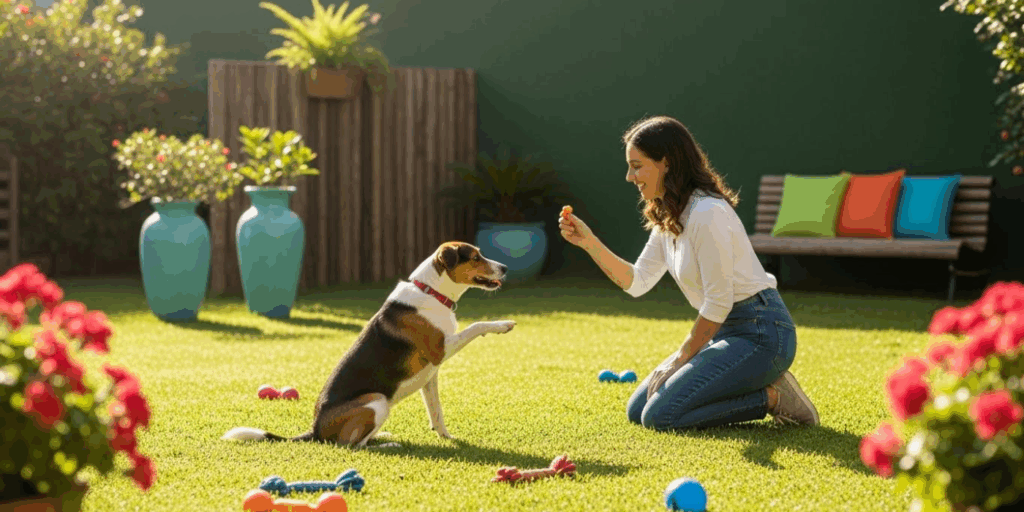
Next up: the adorable “shake” or “give paw.” This trick makes your dog look polite and charming, and it’s surprisingly easy to teach.
Start with your dog in a sitting position. Gently tap the back of one of their front paws while saying “shake.” Most dogs will lift their paw in response. The moment they do—even slightly—say “Yes!” and reward them. Repeat this several times, gradually waiting for a more intentional lift before rewarding.
Soon, you can phase out the tap and just present your open palm. Add the verbal cue consistently, and within a few short sessions, your dog will offer their paw on command.
Why is this useful beyond cuteness? Pawing on cue gives your dog a socially appropriate way to interact—instead of jumping or mouthing. It’s also a great warm-up for other paw-based tricks like “high five” or “wave.”
Fun idea: Teach your dog to shake with both paws! Alternate between “left” and “right” to keep their brain engaged. Plus, it’s a guaranteed conversation starter at the dog park.
Trick #3: “Spin” – A Whirlwind of Fun
Ready to add some flair? Teaching your dog to spin in a circle is a crowd-pleaser that’s easier than it looks—and a fantastic way to burn mental energy.
Hold a treat near your dog’s nose and slowly move it in a tight circle around their head. As they follow the treat with their eyes and body, they’ll naturally pivot in a circle. The moment they complete a full rotation, mark it with “Yes!” and give the treat.
Start with just a half-spin if needed, then gradually build up to a full 360-degree turn. Once they’ve got the motion down, add the cue word—“spin” or “twirl”—right as they begin moving.
This trick is especially great for dogs who love to chase their tails or get overly excited. It channels that energy into a focused, controlled movement. Plus, spinning can be combined with other tricks later—like “spin and sit” or “spin then lie down.”
Bonus benefit: The circular motion helps older dogs maintain joint flexibility and balance, making it a subtle form of physical therapy disguised as play.
Trick #4: “Roll Over” – The Showstopper
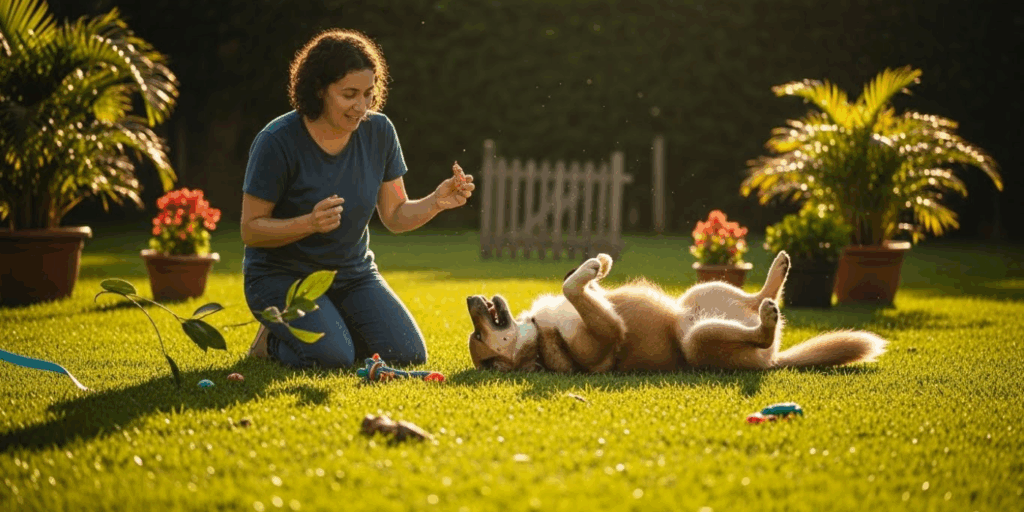
Ah, the classic “roll over”—a trick that never fails to impress. While it may look complicated, it’s simply an extension of “down” and “side.” Start with your dog lying on their side (you can guide them into position gently with a treat).
Holding a treat near their nose, slowly move it across their body toward the ground on the opposite side. Their head will follow, and if you keep the treat low and close, their body will naturally roll over. The moment they complete the roll, reward immediately!
If your dog struggles, break it into steps:
- Lie down.
- Turn head toward shoulder.
- Shift weight onto side.
- Complete the roll.
Use plenty of praise and keep sessions short—just 5 minutes a day. Most dogs master this within a week or two.
Why teach roll over? Beyond the “wow” factor, it encourages body awareness and coordination. It also shows how complex behaviors can be built from simple steps—patience and consistency win every time.
And let’s be honest: watching your dog dramatically flop over for a treat never gets old.
Trick #5: “Find It!” – A Nose-Work Adventure
Not all tricks require movement—some are all about scent and focus. “Find it!” is a simple but powerful game that taps into your dog’s natural hunting instincts.
Start by saying “Find it!” in an excited tone, then toss a treat a few feet away on the ground. Your dog will likely sniff and retrieve it. Repeat this several times, gradually increasing the difficulty—hide the treat under a cup, behind a couch cushion, or in another room.
Eventually, you can use “Find it!” to locate specific items: their leash, a toy, or even your keys (with consistent scent association).
This trick is fantastic for shy or anxious dogs. It gives them a job to do, which builds confidence. It’s also a safe, indoor activity for rainy days or during recovery from injury.
Plus, it’s the foundation for advanced scent work—a sport many dogs absolutely love. You might just discover your pup has the nose of a bloodhound!
Making Training Sessions Fun and Effective
The secret to successful trick training isn’t talent—it’s consistency, timing, and joy. Keep these tips in mind:
- Keep sessions short: 3–5 minutes, 2–3 times a day is ideal. Dogs learn better in frequent, bite-sized chunks.
- Use high-value treats: Small, smelly, and tasty rewards (like chicken or cheese) work best for new tricks.
- Train in a quiet space: Minimize distractions at first. Once your dog masters the trick, practice in busier environments.
- Never force or punish: If your dog seems frustrated, end on a positive note with a trick they already know.
- Celebrate progress: Even a slight head turn or paw lift deserves praise. Small steps lead to big results.
Remember: your energy sets the tone. If you’re smiling and upbeat, your dog will be too. Training should feel like playtime—not a chore.
Beyond Tricks: Building a Happier, Healthier Bond
Every time you teach your dog a new trick, you’re doing more than just adding to their repertoire. You’re creating shared memories, trust, and mutual respect. In a world full of distractions, these quiet moments of connection are priceless.
Trick training also gives you insight into your dog’s personality. Is your pup a quick learner who loves challenges? Or a thoughtful soul who needs extra encouragement? Understanding these nuances helps you become a better, more empathetic caregiver.
And don’t underestimate the mental health benefits—for both of you. Studies show that interacting with pets lowers human stress levels, and engaging in positive activities together amplifies that effect.
So while your dog may be learning to “crawl” or “play dead,” you’re both enjoying a moment of presence, laughter, and love.
Conclusion: Turn Everyday Moments Into Magic
Teaching your dog fun tricks isn’t just about entertainment—it’s a joyful pathway to deeper connection, better behavior, and a more enriched life for your furry companion. From the simple “sit” to the dazzling “roll over,” each trick builds confidence, sharpens the mind, and strengthens the bond you share.
We’ve covered five easy tricks to get you started, along with practical tips to make training effective and enjoyable. But the real magic happens when you make it a habit—when trick time becomes part of your daily rhythm, like walks or cuddles on the couch.
So grab some treats, pick a quiet corner, and give one of these tricks a try. You might be surprised at how quickly your dog learns—and how much fun you both have in the process.
Your turn! What’s the first trick you’re going to teach your dog? Have you already mastered one of these? Share your stories, questions, or proud pup moments in the comments below—we’d love to cheer you on! And if you found this guide helpful, don’t forget to share it with fellow dog lovers who could use a little more fun in their day. 🐾

Lucas Neto is a passionate animal enthusiast who has spent years learning, caring, and connecting with pets of all kinds. His fascination with animals began in childhood and grew into a lifelong dedication to understanding their behavior, needs, and unique personalities. Whether rescuing strays, supporting responsible pet care, or simply enjoying the everyday joy that animals bring, Lucas is committed to sharing his knowledge and love for pets with others.