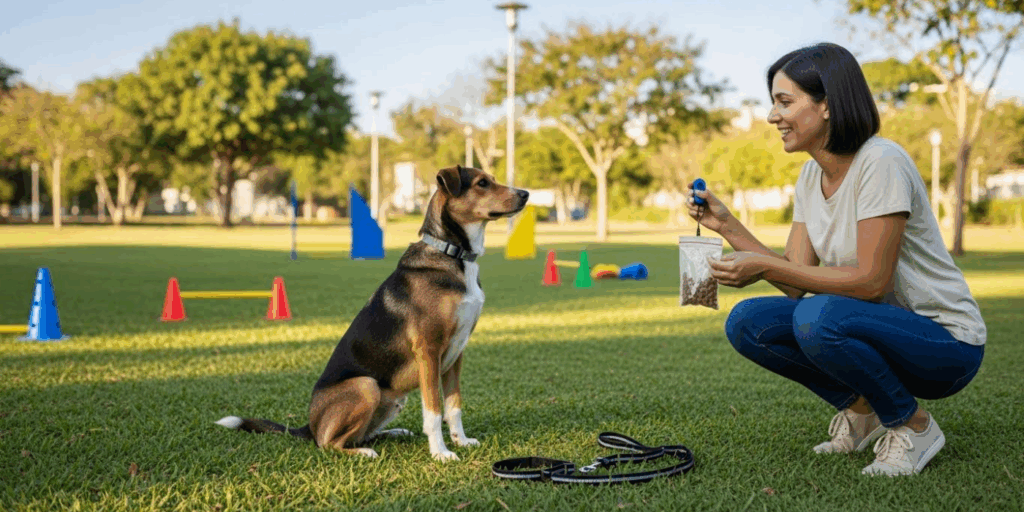
Bringing a new dog into your life is one of the most joyful experiences you’ll ever have—but let’s be honest, it can also be a little overwhelming. Whether you’ve just adopted a wiggly puppy or welcomed a rescue dog into your home, training is essential not just for good behavior, but for building a strong, trusting relationship. And guess what? The right tools can make all the difference.
That’s where essential dog training accessories come in. You don’t need a closet full of gadgets, but a few well-chosen items can transform your training sessions from chaotic to calm, and from frustrating to fun. In this article, we’ll walk you through the must-have tools every beginner dog owner should consider—explaining not just what they are, but why they matter and how to use them effectively. From classic leashes to clever clickers, we’ll cover what works, what doesn’t, and how to choose gear that fits your dog’s personality and your lifestyle. By the end, you’ll feel confident, prepared, and excited to start your training journey the right way.
1. The Humble Leash and Collar: Your First Line of Communication
Let’s start with the basics—because even the most high-tech training setup won’t matter if you can’t walk your dog safely through the park. A quality leash and collar (or harness) are more than just accessories—they’re your primary tools for clear communication and control.
When you’re just starting out, a standard 4- to 6-foot nylon or leather leash gives you enough control without restricting your dog too much. Avoid retractable leashes during training—they encourage pulling and make it harder to teach loose-leash walking. As for collars, a flat buckle collar is usually fine for well-behaved dogs, but if your pup tends to pull or has breathing issues (like many brachycephalic breeds), a front-clip harness is a gentler, more effective choice.
Think of the leash and collar as your dog’s “phone line” to you. Every tug, slack, or gentle correction sends a message. Keep it consistent, and your dog will start to understand your expectations quickly. Plus, having the right gear from day one prevents bad habits—like leash lunging or constant straining—that are much harder to fix later.
Pro tip: Always check the fit. You should be able to slip two fingers comfortably between the collar and your dog’s neck. Too tight? Uncomfortable. Too loose? Risk of escape.
2. The Magic of the Clicker: Precision in Every Click
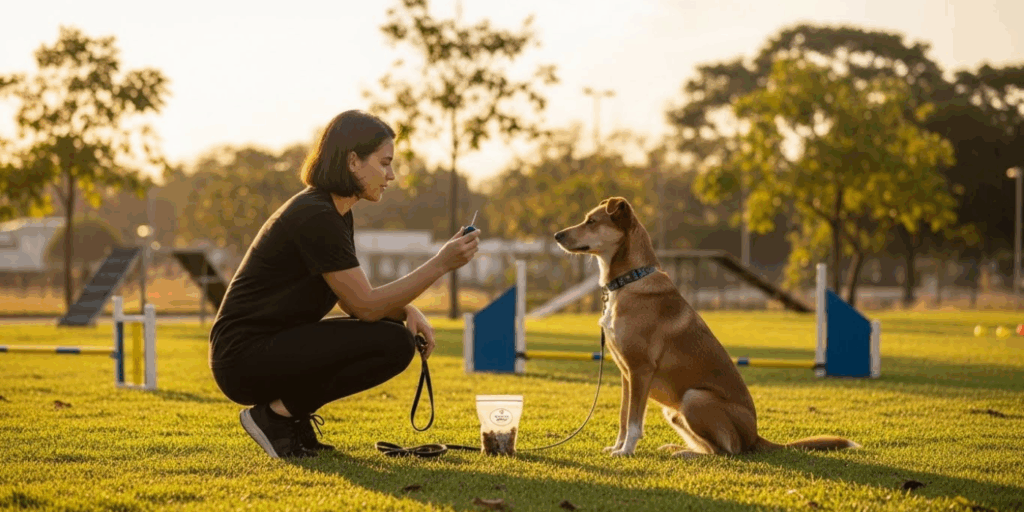
If you’ve ever watched a professional dog trainer work, you’ve probably seen—and heard—a clicker in action. That tiny plastic device makes a sharp, consistent “click” sound to mark the exact moment your dog does something right. It’s not magic, but it might as well be.
Clicker training works because it bridges the gap between behavior and reward. Dogs live in the moment, so if you say “good dog” a second after they sit, they might think they’re being praised for looking up at you or wagging their tail. The click, however, is instantaneous—and when consistently paired with a treat, it becomes a powerful signal: “That! That’s what earned you the snack!”
You don’t need expensive gear—basic clickers cost under $5. Start by “charging” the clicker: click, then immediately give a treat, 10–15 times. Once your dog associates the sound with a reward, you’re ready to shape behaviors. Want your dog to touch a target with their nose? Click the instant they do it. Trying to teach “stay”? Click while they’re still sitting, before they move.
Bonus: Clicker training is stress-free, force-free, and works for dogs of all ages—even seniors or fearful rescues. It builds confidence and makes learning feel like a game.
3. Treats That Train: Not Just Snacks, But Teaching Tools
Let’s talk about the fuel that powers positive reinforcement: training treats. But not all treats are created equal. The key is high value, small size, and fast delivery.
Imagine trying to learn a new skill while someone keeps giving you stale crackers. Not very motivating, right? Your dog feels the same way. During initial training, use soft, smelly, bite-sized treats—like freeze-dried liver, boiled chicken, or commercial training treats under 1 calorie each. They should be small enough to eat in one gulp so training flows smoothly without constant chewing.
Keep treats in a treat pouch worn on your waist. This keeps your hands free, prevents fumbling, and helps your dog focus on you instead of sniffing your pockets. Plus, having a pouch signals to your dog: “Hey, work mode is on!”
Timing matters just as much as taste. Deliver the treat within 1–2 seconds of the click (or verbal marker like “yes!”). This tight feedback loop helps your dog connect action and reward. And remember: treats are part of your dog’s daily calories. Adjust their meals accordingly to avoid weight gain.
Real-life example: Lisa, a first-time dog owner, used tiny pieces of hot dog to teach her rescue pup “leave it” near busy sidewalks. Within a week, her dog was ignoring dropped food—a lifesaver in urban environments.
4. Training Mats and Target Sticks: Creating Calm and Clarity
As your dog progresses beyond basic commands, you’ll want tools that help with focus, placement, and impulse control. That’s where training mats and target sticks shine.
A training mat (or even a yoga mat) becomes your dog’s personal “place.” Teach them to go to the mat and lie down, and you’ve created a portable zone of calm—perfect for busy households, vet waiting rooms, or coffee shop patios. Start by tossing treats onto the mat, then gradually add the cue “go to your spot.” Over time, the mat becomes a cue for relaxation, even amid distractions.
Meanwhile, a target stick—a lightweight rod with a soft ball on the end—helps guide your dog’s movement without touching them. Want your dog to turn in a circle? Touch the stick to their nose, move it in an arc, and reward when they follow. Need them to back up? Present the target, then slowly pull it toward you. It’s especially useful for shy dogs who avoid close contact or for teaching complex tricks.
Why it works: These tools reduce confusion. Instead of guessing what you want, your dog has a clear visual or spatial cue. It’s like giving them GPS for good behavior.
5. Keeping It Consistent: The Role of a Training Journal and Timer
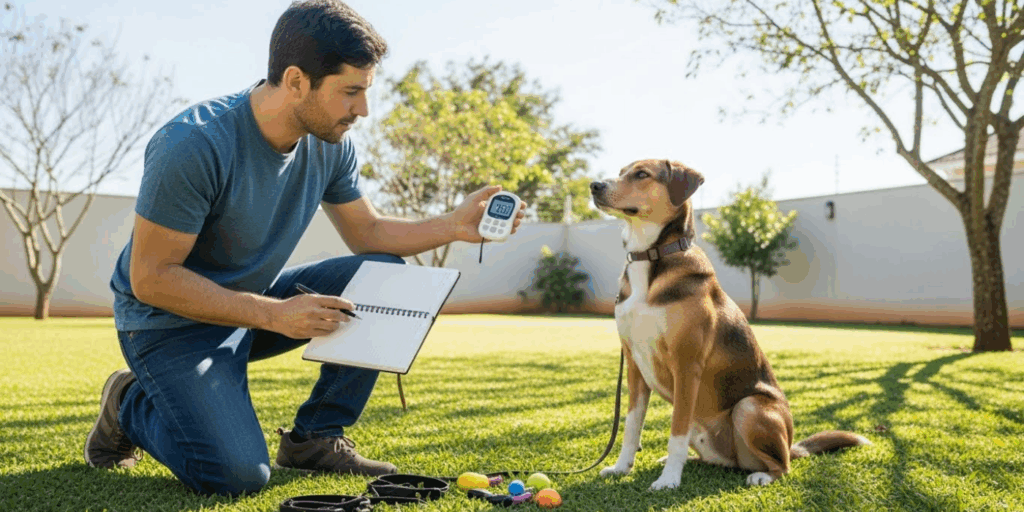
Here’s a secret many beginners overlook: consistency beats intensity. Training for 5 focused minutes daily is far more effective than one chaotic hour on the weekend. And to stay consistent, you need simple systems—like a training journal and a timer.
A training journal (even a notes app on your phone) helps you track what you’ve practiced, what’s working, and where your dog struggles. Did “stay” improve when you reduced distractions? Did barking spike after a trip to the dog park? Patterns emerge over time, helping you adjust your approach. Plus, seeing progress—even small wins—boosts your motivation.
Use a kitchen timer or phone app to keep sessions short. Dogs, especially puppies, have short attention spans. Training past their mental limit leads to frustration or disengagement. Set the timer for 3–5 minutes, end on a success, and quit while you’re ahead. Your dog will look forward to the next session instead of dreading it.
Fun fact: Studies show that dogs retain information better when learning is broken into short, frequent sessions—a principle called spaced repetition. You’re not slacking by keeping it brief; you’re optimizing learning.
6. Safety and Comfort: Muzzles, Gates, and Calming Aids
Let’s address the elephant in the room: sometimes, training involves managing safety or anxiety. And that’s okay. Using tools like muzzles or baby gates isn’t a sign of failure—it’s responsible, compassionate training.
A basket muzzle (never a cloth or restrictive type) allows your dog to pant, drink, and even take treats while preventing biting or scavenging. If your dog is reactive, fearful, or recovering from surgery, a muzzle keeps everyone safe while you work on behavior modification. Introduce it slowly with positive associations—feed meals near it, then inside it—so it never feels like punishment.
Similarly, baby gates or exercise pens create safe zones for management. Instead of constantly saying “no” when your dog jumps on guests, gate them in a quiet room until they’re calm. Prevention is easier than correction—and less stressful for everyone.
For dogs with noise phobias or separation anxiety, calming aids like ThunderShirts, Adaptil diffusers, or white noise machines can lower stress levels, making training more effective. Remember: a dog can’t learn when they’re in fight-or-flight mode.
Important: These tools support training—they don’t replace it. Pair them with professional guidance if needed, especially for serious behavioral issues.
7. Tech That Helps (Without Taking Over)
In today’s world, there’s an app or gadget for everything—including dog training. While nothing replaces hands-on practice, smart collars, training apps, or video resources can enhance your efforts.
Apps like Puppr or Dogo offer step-by-step video tutorials for everything from “sit” to “emergency recall.” They’re perfect for visual learners or when you’re stuck on a specific skill. Some even include progress trackers and reminders.
Meanwhile, GPS trackers (like Fi or Whistle) won’t teach commands, but they provide peace of mind during off-leash practice in secure areas. And calm-down playlists on Spotify (yes, they exist!) can soothe your dog during crate training or storms.
Just be cautious with shock or vibration collars. Not only are they discouraged by major veterinary and training associations, but they can damage your relationship with your dog and worsen anxiety. Stick to positive, reward-based tools—they build trust, not fear.
Remember: Technology should simplify training, not complicate it. If a gadget feels gimmicky or confusing, skip it. Your presence and consistency matter more than any app.
Conclusion: Build a Bond, One Tool at a Time
Training your dog isn’t about control—it’s about connection. The accessories you choose aren’t just gadgets; they’re bridges that help you communicate, understand, and grow together. From the reliability of a well-fitted harness to the clarity of a clicker, each tool serves a purpose: making learning joyful, safe, and effective.
As a beginner, it’s easy to feel like you need to do everything perfectly. But here’s the truth: your dog doesn’t expect perfection. They just want to understand what you’re asking—and to know that you’ve got their back. With the right gear, a little patience, and lots of encouragement, you’ll build a relationship that’s rooted in trust, not commands.
So go ahead—grab that leash, fill your treat pouch, and give that clicker a try. Every small step you take today sets the stage for a happier, more harmonious life together tomorrow.
Now we’d love to hear from you! What’s the first training accessory you bought for your dog—and how did it change your routine? Share your story in the comments below, or tag a friend who’s just starting their dog training journey!

Lucas Neto is a passionate animal enthusiast who has spent years learning, caring, and connecting with pets of all kinds. His fascination with animals began in childhood and grew into a lifelong dedication to understanding their behavior, needs, and unique personalities. Whether rescuing strays, supporting responsible pet care, or simply enjoying the everyday joy that animals bring, Lucas is committed to sharing his knowledge and love for pets with others.