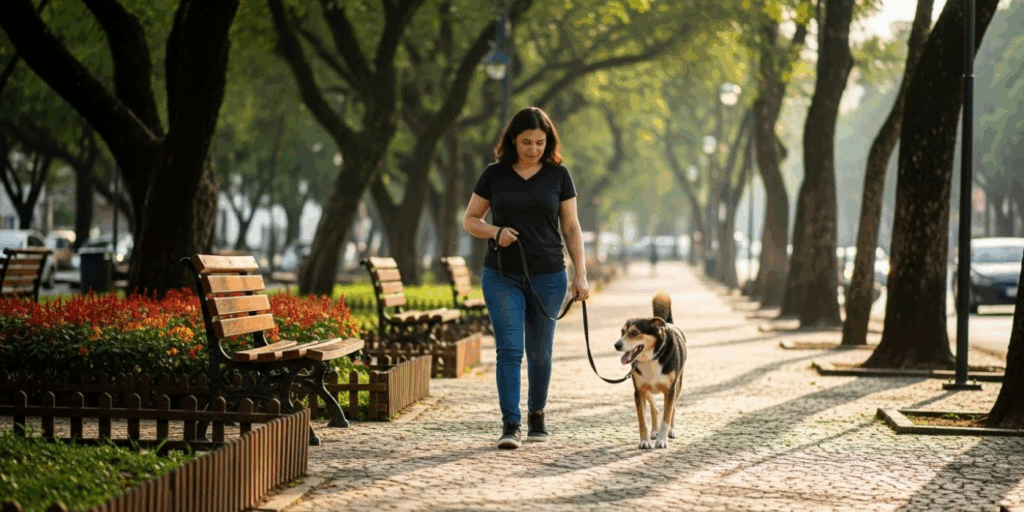
You love your dog. You want to take them for walks—fresh air, exercise, sniffing all the interesting smells—but every time you step out the door, it feels like you’re being dragged by a furry freight train. Your arm aches. Your shoulders tense. You avoid walks altogether because they’re more stressful than relaxing.
If this sounds familiar, you’re not alone. Pulling on the leash is one of the most common frustrations dog owners face. But here’s the good news: it’s not your dog’s fault—it’s a training gap. And the best part? You can fix it. Without yelling, without choke chains, without giving up.
In this guide, we’ll walk you through exactly how to stop your dog from pulling on walks—step by step, with patience, science-backed methods, and real-life examples. You’ll learn why dogs pull, how to reframe your mindset, what tools actually work (and which ones don’t), and how to turn every walk into a joyful, bonding experience—not a battle.
By the end, you won’t just have a dog that walks nicely beside you—you’ll have a deeper connection, fewer headaches, and more walks you actually look forward to.
Why Do Dogs Pull on Leashes? (It’s Not Just “Bad Behavior”)
Let’s start by letting go of the idea that your dog is being “bad” or “stubborn.” Dogs don’t pull because they’re trying to boss you around. They pull because they’re excited, curious, and wired to explore.
Think about it: to your dog, a walk is like stepping into a sensory wonderland. Every bush holds a mystery. Every passing squirrel is a potential adventure. Every scent trail is a novel. Meanwhile, you’re focused on getting to the park, checking your phone, or making it home before dinner.
That disconnect? That’s the root of the problem.
Studies from the University of Lincoln show that over 70% of dogs exhibit leash-pulling behavior, and most owners try to correct it by yanking back, using prong collars, or shouting. But here’s the irony: pulling often gets reinforced. When your dog pulls forward and reaches the squirrel, the reward—exploring—comes immediately. That’s operant conditioning in action. Your dog learns: Pull = Good Things Happen.
So instead of punishing the pull, we need to teach your dog that walking calmly beside you is even more rewarding.
Here’s a simple mental shift: You’re not trying to stop pulling—you’re teaching your dog to choose to walk with you.
And guess what? Dogs love to make choices. Especially when those choices lead to treats, praise, and freedom.
The Right Gear: Tools That Help, Not Hurt
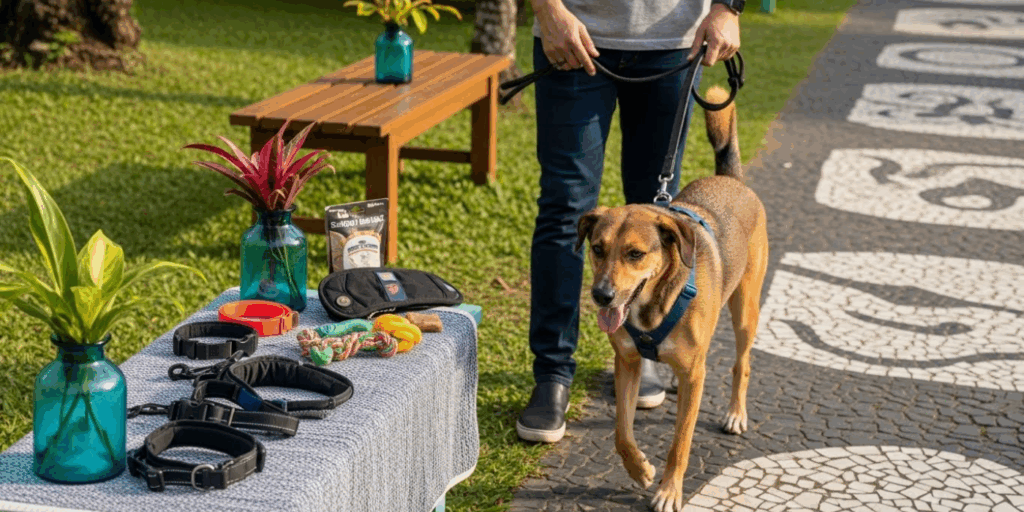
Before we dive into training, let’s talk equipment. Because no amount of training will work if you’re using the wrong tools.
Avoid: Choke chains, prong collars, and shock collars. These may suppress pulling temporarily, but they cause pain, fear, and can damage your dog’s trust. Worse—they don’t teach your dog what to do instead. They just make them afraid to pull… until you’re not around.
Do Use:
- A front-clip harness (like the PetSafe Easy Walk or Freedom No-Pull Harness): This gently redirects your dog’s momentum toward you when they pull. It’s not a punishment—it’s physics. When they try to lunge forward, the leash pulls their chest sideways, naturally turning them back toward you.
- A standard 6-foot nylon or leather leash: Avoid retractable leashes. They give your dog too much freedom and make it impossible to control the pace or teach boundaries.
- A well-fitted collar or harness: Make sure it’s snug but not tight—you should fit two fingers underneath.
One client I worked with, Lisa, used a prong collar for months. Her dog, Max, stopped pulling… but started trembling at the sight of the leash. After switching to a front-clip harness and positive training, Max didn’t just stop pulling—he started looking back at Lisa for cues. That’s the magic we’re after.
Pro Tip: If your dog is strong or large (like a Labrador, Husky, or German Shepherd), a front-clip harness is your best friend. It’s not a crutch—it’s a training aid.
Step-by-Step Training: The “Stop and Go” Method
Now for the good stuff: the actual training.
The most effective method is called “Stop and Go.” It’s simple, humane, and works for dogs of any age or breed.
Here’s how it works:
- Start inside your home or yard—a low-distraction environment.
- Attach your dog’s harness and leash. Hold the leash with both hands, keeping it loose.
- Take one step forward. If your dog follows you calmly, say “Yes!” and give a small treat.
- If your dog pulls ahead—even one foot—STOP IMMEDIATELY. Stand still like a tree. Don’t tug. Don’t yell. Just stop.
- Wait. The moment your dog turns back toward you—even slightly—say “Yes!” and reward.
- Then, take another step. Repeat.
It sounds too easy, right? But here’s the science: your dog learns that pulling = nothing happens. Walking beside you = treats and movement.
Think of it like a toddler in a grocery cart. If they scream, you don’t give them candy. But if they sit quietly? You give them a snack. Dogs learn the same way.
Real-life example: Mark, a teacher from Ohio, trained his 1-year-old Golden Retriever, Daisy, in just 10 days using this method. He started with 3-minute sessions in his backyard. Within a week, Daisy was walking calmly beside him on the sidewalk. Now? They take 45-minute walks together—no pulling, no stress. “It felt like we finally understood each other,” he told me.
Key Rules:
- Never reward pulling. Even if you’re in a hurry.
- Always reward the absence of pulling.
- Be patient. This isn’t a one-day fix. It’s a new habit.
- Celebrate tiny wins. A half-second of loose leash? That’s progress!
The Magic of “Loose Leash Walking” (And How to Make It Fun)
Once your dog gets the hang of “Stop and Go,” it’s time to level up: Loose Leash Walking (LLW).
LLW isn’t just about not pulling—it’s about walking with your dog, not against them. It’s a dance. And like any good dance, it’s more fun when both partners are in sync.
Here’s how to make it playful:
- Change directions randomly. Every 5–10 steps, turn left, then right, then circle around. Your dog will start watching you, wondering, “Where are we going next?” This keeps their attention on you, not the squirrel 20 yards ahead.
- Use high-value treats (like small pieces of chicken or cheese) during distractions. Reserve these only for walks.
- Say “Let’s go!” in a cheerful voice when you start walking. Use it as a cue that movement = rewards.
- Reward every 3–5 steps at first. Then gradually space out treats—like a slot machine. Dogs love unpredictability. They’ll keep checking in to see if the next step brings a treat.
I once trained a shy rescue named Luna who used to freeze on walks. We started with one step, then one treat. After a week, she was trotting beside me, tail wagging, looking up like, “What’s next?” She didn’t just stop pulling—she wanted to walk with me.
Bonus: Try walking in a zigzag pattern. It’s not just training—it’s a game. Your dog thinks you’re playing “follow the leader.” And you are.
Handling Distractions: Squirrels, Other Dogs, and Doorbells
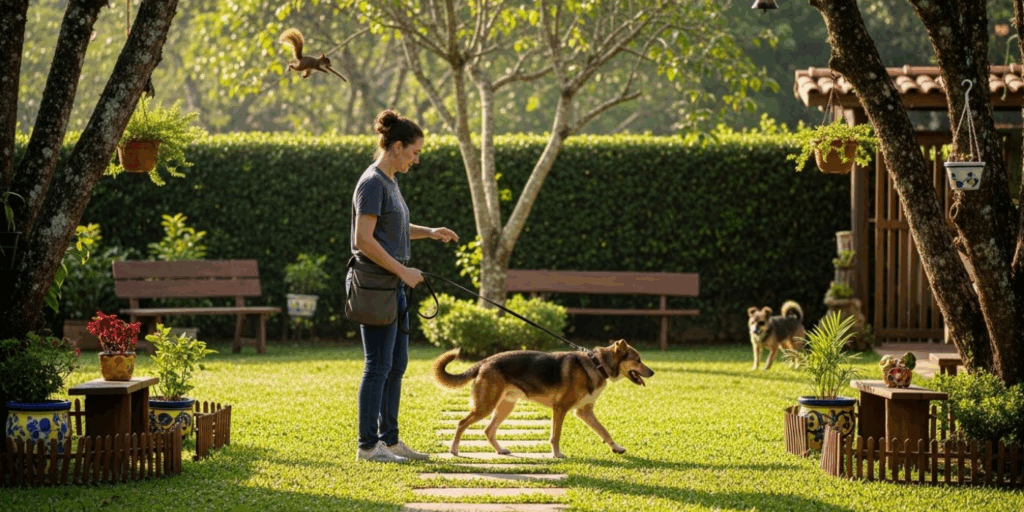
Let’s be real: your dog’s biggest enemies aren’t you—they’re squirrels, mail carriers, and other dogs on the sidewalk.
Distractions are the ultimate test. And here’s the secret: you don’t need to eliminate distractions. You need to teach your dog to choose you over them.
Here’s a simple strategy called “Look at That” (LAT):
- When your dog notices a distraction (say, a squirrel), the moment they glance at it, say “Yes!” and give a treat.
- Then, calmly redirect their attention back to you with a treat or toy.
- Reward them for looking at you instead of the squirrel.
This teaches your dog: “Seeing a squirrel? Cool. But looking at my human? Even better.”
Real story: Sarah, a nurse in Portland, used to dread walking her Border Collie, Jasper, past the dog park. He’d scream, leap, and pull so hard she’d drop the leash. She started using LAT. First, she rewarded him for glancing at a dog 50 feet away. Then 40. Then 30. Within two weeks, Jasper would see another dog, pause, and look to Sarah for direction. “He’s still excited,” she said, “but now he’s choosing to stay with me.”
Pro Tip: Always carry high-value treats on walks. And if you’re near a high-distraction area, walk on the side away from the trigger—like walking on the sidewalk opposite the dog park. You’re not avoiding the problem—you’re building confidence slowly.
Patience, Consistency, and the Power of Routine
Training isn’t about speed. It’s about consistency.
You wouldn’t expect to learn piano after one lesson. Same with leash walking.
Here’s the golden rule: 10 minutes a day, every day, beats 1 hour once a week.
Set a timer. Do short, positive sessions. Even if you’re walking to the mailbox—use it as practice. Every step counts.
Also, never train when you’re frustrated. If you’re angry, tired, or rushed, your dog will feel it. And they’ll pick up on your stress. Walks should feel calm, not chaotic.
Build a routine:
- Same time every day.
- Same route at first.
- Same treats.
- Same cues (“Let’s go,” “Yes!”).
Consistency creates predictability. And predictability = confidence.
One of my favorite clients, Tom, trained his 8-year-old Beagle, Rocky, while recovering from knee surgery. He couldn’t walk far, so he did 5-minute sessions on the porch. Three months later, Rocky walked perfectly on leash—even on busy streets. “I didn’t have time to be perfect,” Tom said. “But I had time to be consistent.”
That’s the secret.
The Emotional Payoff: More Than Just a Calm Walk
Let’s take a moment to reflect.
When you stop pulling, you’re not just fixing a behavior—you’re changing your relationship.
Dogs who walk calmly beside you are:
- Less anxious (they know what to expect),
- More confident (they trust your leadership),
- And more connected (they look to you for cues, not just the next scent).
Think about it: how often do you really connect with your dog? Between work, chores, and screens, many of us barely spend quality time with them. But a walk? That’s sacred time.
A calm walk means:
- No more sore shoulders.
- No more embarrassment at the park.
- No more avoiding walks because they’re too stressful.
- And most importantly—more joy.
I once met a woman named Elena who hadn’t walked her dog in 6 months because of pulling. After just 3 weeks of gentle training, they started going on 2-mile walks every morning. “It’s the first time I’ve felt like we’re truly partners,” she told me, tears in her eyes.
That’s the real win.
Final Tips: Quick Wins for Immediate Results
Before you head out on your next walk, here are 5 quick tips to set yourself up for success:
- Walk before meals. A hungry dog is a focused dog. Treats work better when they’re not full.
- Use the “U-Turn” trick. If your dog pulls, turn around and walk the other way. Most dogs don’t like being led backward—they’ll check in.
- Carry treats in a waist pouch. Keep them handy. No digging in pockets.
- Don’t let your dog sniff at the start. Let them sniff after walking calmly for 2–3 minutes. It teaches them: calm behavior = freedom.
- Celebrate the little things. A half-second of loose leash? Say “Yes!” and smile. Your energy matters.
You’ve Got This—One Step at a Time
Stopping your dog from pulling isn’t about dominance. It’s about connection. It’s not about forcing them to obey—it’s about inviting them to choose you.
Every time you stop and wait. Every time you reward the calm. Every time you turn and walk the other way—you’re building trust. You’re saying, “I see you. I hear you. And I’m here with you.”
Your dog doesn’t need to be perfect. They just need to know they’re safe, understood, and loved.
So next time you grab the leash, take a deep breath. Smile. Remember: this isn’t a battle. It’s a dance.
And you’re both learning the steps—together.
Ready to transform your walks? Start today. Pick one technique—maybe “Stop and Go”—and try it for just 5 minutes. Notice how your dog responds. Write down one small win. Celebrate it.
And if you’ve tried other methods that didn’t work, I’d love to hear about them. Drop a comment below—what’s your biggest leash-pulling challenge? Maybe your story will help someone else feel less alone.
Because every dog deserves to enjoy the walk. And every owner deserves to enjoy the walk too.
You’ve got this. One step. One treat. One moment at a time. 🐾

Lucas Neto is a passionate animal enthusiast who has spent years learning, caring, and connecting with pets of all kinds. His fascination with animals began in childhood and grew into a lifelong dedication to understanding their behavior, needs, and unique personalities. Whether rescuing strays, supporting responsible pet care, or simply enjoying the everyday joy that animals bring, Lucas is committed to sharing his knowledge and love for pets with others.