
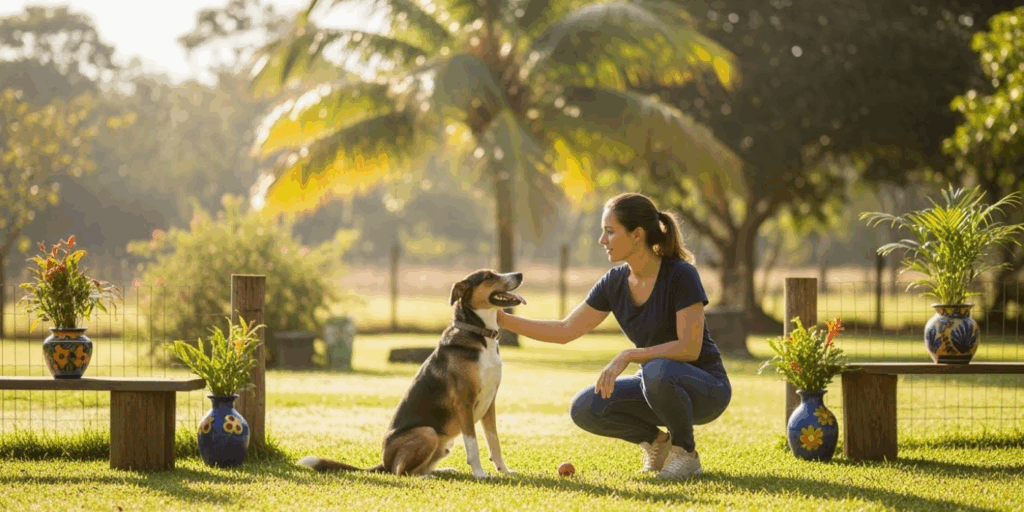
You’ve probably heard it before: “If you want a well-behaved dog, you’ve got to be the boss.” But what if that’s not just outdated advice—it’s actually hurting your relationship with your furry best friend?
The truth is, dogs aren’t little wolves trying to overthrow the pack. They’re social, emotional beings who thrive on connection, consistency, and trust. And the most effective way to teach them good behavior? Not through force, fear, or punishment—but through kindness, patience, and science-backed positive reinforcement.
If you’ve ever felt frustrated yelling “No!” at your pup for jumping on guests, or guilty for using a choke chain to stop pulling on walks, this article is for you. You’re not alone. Millions of dog owners have been sold the myth that dominance equals control. But modern canine behavior science has flipped that script—and the results are incredible.
In this guide, we’ll explore the most powerful, proven positive dog training methods that actually work—without ever raising your voice or using pain. You’ll learn how to build a bond so strong, your dog will choose to listen—not because they’re scared, but because they want to. We’ll break down real-life examples, simple techniques you can start today, and even how to fix stubborn behaviors like barking, chewing, or leash pulling using rewards, not reprimands.
By the end, you won’t just know how to train your dog—you’ll understand why these methods create lasting change. And best of all? You’ll enjoy your walks, your home, and your time together more than ever before.
Let’s get started.
Why Positive Training Works (And Why Punishment Doesn’t)
Let’s be honest: punishment seems like it should work. You say “No!” Your dog jumps off the couch. You think, Great, it worked! But here’s the catch: punishment tells your dog what not to do—but it rarely teaches them what to do instead.
Imagine you’re at work, and your boss yells at you every time you make a typo. You stop typing… but now you’re terrified to open your email. You don’t know what the right way is—you just know to avoid getting yelled at. That’s how your dog feels when you yell, jerk the leash, or use shock collars.
Research from the University of Pennsylvania’s School of Veterinary Medicine found that dogs trained with punishment-based methods showed significantly higher levels of stress hormones—and were more likely to develop aggression, anxiety, and avoidance behaviors. In contrast, dogs trained with rewards showed increased confidence, stronger bonds with their owners, and better long-term obedience.
Positive training doesn’t mean being a pushover. It means being a teacher.
Think of it like this: Would you rather learn to drive from someone who screams at you every time you miss a turn… or someone who says, “Nice job staying in your lane! Now let’s try merging smoothly”? Dogs respond to the same principle.
The magic of positive training lies in reinforcement. When your dog does something you like—sitting when you ask, coming when called, walking calmly on leash—you give them something they value: a treat, a toy, a belly rub, or even just your enthusiastic praise. Over time, they learn that good behavior = good things happen.
And here’s the kicker: dogs trained this way don’t just obey when you have treats. They obey because they’ve learned that listening to you is fun.
So if you’ve been relying on “alpha rolls” or yelling, stop. You’re not being firm—you’re being misunderstood. Your dog isn’t being “bad.” They’re just confused. And the good news? You can fix that—with kindness.
The 4 Pillars of Positive Dog Training (And How to Use Them)
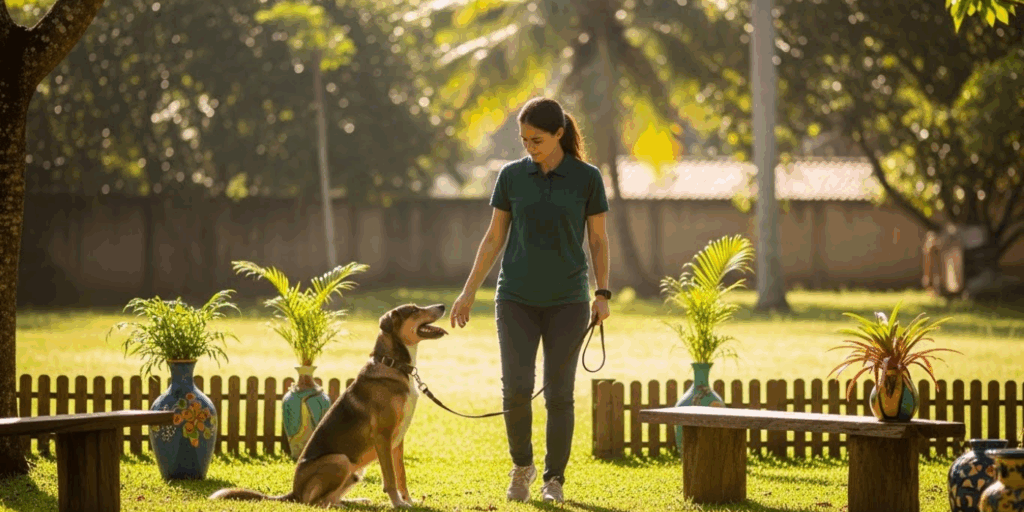
Positive training isn’t magic. It’s method. And it’s built on four simple, powerful pillars:
- Timing
- Consistency
- Motivation
- Clarity
Let’s break them down with real examples.
Timing is everything. If your dog jumps on the counter and you say “No!” five seconds later, they have no idea what you’re talking about. Dogs live in the moment. To teach them, you must mark the exact moment they make the right choice. That’s where a clicker—or a simple “Yes!”—comes in. Say “Yes!” the second their bottom touches the floor instead of jumping. Then reward. Instant connection.
Consistency is what turns a one-time success into lifelong behavior. If you sometimes let your dog on the couch and other times yell, they’ll be confused. Pick a rule and stick to it—even when you’re tired. Everyone in the household must be on the same page. That means Grandma, your partner, your kids—all of you.
Motivation is what makes your dog want to learn. Not all dogs love treats. Some prefer toys, belly rubs, or the chance to go outside. Figure out what lights your dog up—and use it. A high-value treat might be chicken, cheese, or freeze-dried liver. A toy might be a squeaky ball or a tug rope. Use it only during training sessions to keep it special.
Clarity means giving your dog one clear cue at a time. Don’t say, “Sit, stay, don’t jump, come here, no, no, no!” That’s noise. Say, “Sit.” Wait. Reward. Then add “Stay.” One skill at a time. Your dog isn’t being stubborn—they’re overwhelmed.
Try this today: Pick one behavior you want to change—maybe your dog pulls on walks. Instead of yanking the leash, stop walking the moment they pull. Wait. When the leash loosens—even slightly—say “Yes!” and keep walking. Reward them with praise or a treat when they walk beside you. Within days, you’ll notice a difference. Not because you scared them… but because you taught them.
It’s not about control. It’s about collaboration.
Turning Everyday Moments Into Training Opportunities
You don’t need hours of formal training sessions to raise a well-behaved dog. In fact, the best training happens during your daily routine.
Think about it: You already feed your dog. You already walk them. You already play with them. Why not turn those moments into learning opportunities?
Mealtime Training: Instead of dumping food in the bowl, ask your dog to “Sit” first. Then “Stay.” Then release with “Okay!” This teaches impulse control—something that prevents jumping, stealing food, and even door dashing.
Leash Walks: Every time your dog glances at you while walking? Say “Yes!” and toss a treat. Soon, they’ll learn that looking at you = good things happen. This is called “Look at That” training—and it’s a game-changer for reactive or distracted dogs.
Greeting Guests: Practice “Sit” or “Go to your mat” before anyone enters the house. Reward them for staying calm. Over time, they’ll associate visitors with peace and treats—not chaos.
Crate Time: Don’t use the crate as punishment. Make it cozy with a blanket, a stuffed Kong, and happy praise. Let them go in voluntarily. Soon, it becomes their safe haven—not a jail.
One of my clients, Lisa, had a rescue pup named Max who would scream for hours when left alone. She tried everything—bark collars, leaving the TV on, ignoring him. Nothing worked. Then she started using positive training: she gave Max a stuffed Kong every time she left, paired it with a calm goodbye, and returned before he got anxious. Within two weeks, Max stopped barking. He didn’t just learn to be quiet—he learned to feel safe.
The secret? You’re not training your dog in spite of life—you’re training them through life.
And here’s the beautiful part: when you turn routine into learning, you’re not just fixing problems. You’re building trust. You’re showing your dog, “I’ve got your back. We’re in this together.”
That’s the kind of bond no choke chain can create.
Fixing Common Behavior Problems—Without Punishment
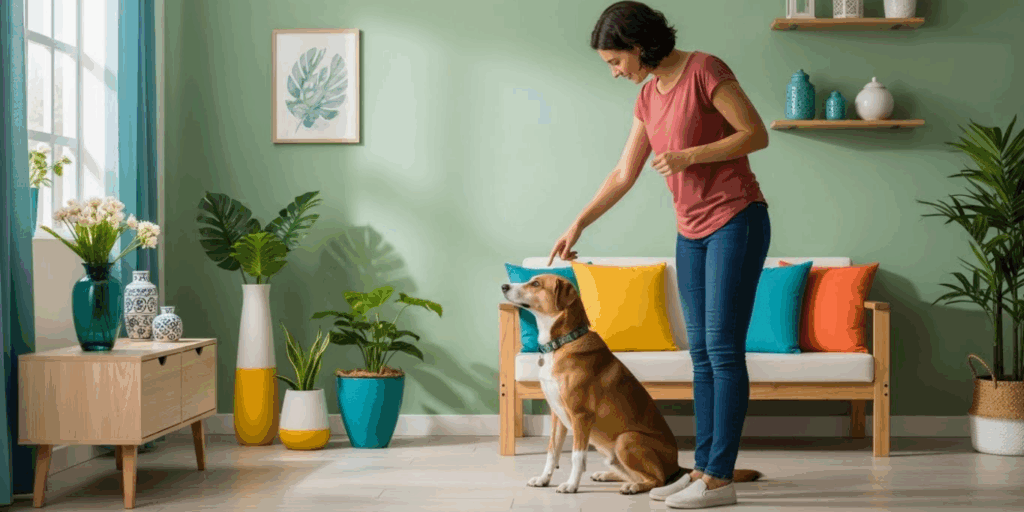
Let’s talk about the big ones: barking, chewing, jumping, and leash pulling. These are the behaviors that drive dog owners to their wits’ end. But here’s the truth: they’re not signs of disobedience. They’re signs of unmet needs.
Barking? Your dog might be bored, anxious, or trying to tell you something. Instead of yelling, figure out the why. Is it boredom? Give them puzzle toys. Is it fear? Desensitize them slowly with treats. Is it excitement? Teach them “Quiet” by rewarding silence.
Chewing? Puppies chew to explore. Adult dogs chew to relieve stress. Don’t punish the chewing—redirect it. Keep safe chew toys handy. If they grab your shoe, say “Oops!” and swap it for a Kong. Reward them for choosing the right thing.
Jumping? Most dogs jump because they’re excited to greet you. But they’ve learned that jumping gets attention—even if it’s negative. So stop giving attention when they jump. Turn away. Cross your arms. Ignore. The second all four paws are on the ground, turn back, say “Yes!” and reward. It’s that simple.
Leash pulling? This is the most common complaint. And the most fixable. As we mentioned earlier: stop walking when they pull. Move when they loosen the leash. Add “Watch me” cues. Use a front-clip harness (not a prong or choke collar) to reduce strain. And always reward the moments they walk calmly beside you.
One of my favorite stories? A client named David had a 90-pound German Shepherd named Rex who’d drag him down the street like a sled dog. David tried every “tough love” method—yanking, yelling, even a shock collar. Rex got worse. Then David tried the “stop and wait” method. He started carrying treats. He rewarded every step where Rex stayed near his side. Within three days, Rex was walking like a pro. Not because he was scared. Because he learned that walking nicely was more fun than pulling.
You don’t need to be stronger than your dog. You just need to be smarter.
Building a Lifelong Bond Through Trust, Not Control
Here’s the most important thing no one tells you: Positive training isn’t just about teaching tricks. It’s about building a relationship.
When you use rewards instead of punishment, you’re telling your dog: “I see you. I hear you. I’m not here to break you—I’m here to help you.”
Dogs trained this way don’t just obey. They choose to obey. They look to you for guidance. They light up when they see you. They sleep peacefully beside you because they feel safe.
Compare that to a dog trained with fear. That dog might look obedient—but they’re tense. They avoid eye contact. They flinch when you raise your hand. They don’t trust you. And that’s not a dog owner’s dream. That’s a tragedy.
Positive training turns your dog into a partner—not a prisoner.
And the benefits go beyond behavior. Studies show that owners who use positive methods report higher levels of satisfaction with their pets. Their dogs are more confident, more playful, and more emotionally resilient.
Think about it: Would you rather have a dog who follows you because they love you… or because they’re afraid of what happens if they don’t?
There’s no contest.
You don’t need to be a professional trainer to make this work. You just need to be consistent, patient, and kind. You need to celebrate the small wins. You need to remember that your dog isn’t trying to challenge you—they’re trying to understand you.
And when you approach training with empathy, you don’t just get a well-behaved dog.
You get a best friend.
Your Next Step: Start Today—One Small Win at a Time
You don’t need to overhaul your life to start positive training. You just need to begin.
Here’s your simple 5-minute challenge for today:
- Pick one behavior you want to improve (e.g., jumping, leash pulling, barking).
- Find one motivator your dog loves (a treat, a toy, a scratch behind the ears).
- Wait for the behavior you want—even if it’s tiny. When it happens, say “Yes!” and reward.
- Repeat 3–5 times today.
- Celebrate. You just started changing your dog’s life.
That’s it.
No yelling. No tools. No guilt.
Just you, your dog, and a little bit of patience.
And if you’re wondering, “Will this take too long?”—yes, it might. But the results? Last a lifetime.
Unlike punishment, which creates temporary compliance, positive training creates lasting change. It builds confidence. It deepens connection. It turns your home into a place of calm—and your walks into joyful adventures.
So if you’ve been holding off because you think you’re “too late,” or your dog is “too old,” or “too stubborn”—stop. Dogs of all ages can learn. And they’ll thank you for it.
Final Thought: Your Dog Isn’t Broken. You’re Just Learning How to Speak Their Language.
We’ve been taught to think of dogs as creatures who need to be controlled. But the truth? They’re creatures who need to be understood.
Every tail wag, every nudge, every silent look—they’re all trying to tell you something. And when you respond with kindness instead of correction, you unlock a bond that’s deeper than obedience.
It’s love.
It’s trust.
It’s partnership.
So next time your dog does something “wrong,” pause. Breathe. Ask yourself: What are they trying to communicate?
Then teach them—not through fear, but through joy.
Because the best-trained dog isn’t the one who follows commands out of fear.
It’s the one who chooses to follow you… because they love you.
Your Turn: What’s one small behavior you’re going to start training with positive methods this week? Maybe it’s teaching your dog to sit before meals. Or walking calmly on the leash. Or just saying “Yes!” more often.
Drop a comment below—I’d love to hear your story. And if you found this helpful, share it with a friend who’s struggling with their pup. Because every dog deserves to be trained with love.
And every owner deserves to enjoy their dog—not just tolerate them.
You’ve got this. 🐶💛

Lucas Neto is a passionate animal enthusiast who has spent years learning, caring, and connecting with pets of all kinds. His fascination with animals began in childhood and grew into a lifelong dedication to understanding their behavior, needs, and unique personalities. Whether rescuing strays, supporting responsible pet care, or simply enjoying the everyday joy that animals bring, Lucas is committed to sharing his knowledge and love for pets with others.