
Imagine this: You walk into your living room, and your dog—bright-eyed, tail wagging like a metronome set to “hyper”—bounds toward you, knocking over a lamp, stealing your socks, and nearly sending your coffee flying. You say, “Sit!”… and he does the opposite. He spins. He jumps. He licks your face like you just won the lottery.
Sound familiar?
If you’ve ever felt overwhelmed trying to teach your dog basic manners, you’re not alone. But here’s the good news: teaching your dog to sit isn’t just about obedience—it’s the foundation of a calmer, happier, and more connected relationship between you and your furry friend. And the best part? You don’t need fancy tools, hours of training, or a degree in canine psychology. With just a few simple steps, patience, and a handful of treats, you can have your dog sitting politely—on command—in as little as a few days.
In this guide, we’ll walk you through exactly how to teach your dog to sit using proven, positive-reinforcement methods that work for every breed, age, and personality. We’ll break down why “sit” is the most important command you’ll ever teach, how to avoid common mistakes that slow progress, and how to turn training into a fun, bonding ritual—not a chore. Plus, we’ll share real-life stories from dog owners who turned chaos into calm, one sit at a time.
By the end, you won’t just know how to get your dog to sit—you’ll understand why it matters. And you’ll leave with the confidence to train your pup with joy, not frustration.
Why “Sit” Is the Most Important Command You’ll Ever Teach
Let’s be honest: dogs don’t come with instruction manuals. But if they did, “Sit” would be on page one.
Think about it—how many daily situations could be smoother if your dog simply sat instead of launching himself at the door, jumping on guests, or begging relentlessly at the dinner table? “Sit” is the universal pause button. It gives your dog a moment to reset. It teaches self-control. And it opens the door to every other command you might want to teach later—stay, heel, lie down, even “leave it.”
According to the American Kennel Club, over 85% of dog owners who report strong bonds with their pets credit basic obedience training as a key factor. And “sit” is almost always the first skill they learned together.
But here’s the secret most people miss: “Sit” isn’t just a trick—it’s a conversation. When you ask your dog to sit, you’re saying, “I’m in charge, but I’m also here to help you feel safe.” When he responds, he’s saying, “I trust you.” That’s powerful.
I once met a woman named Lisa who adopted a rescue terrier named Milo. He was terrified of strangers, would bark nonstop at the mailman, and refused to let anyone near his food bowl. After just three days of practicing “sit” before meals, before walks, even before getting his leash, something shifted. “He started looking at me before reacting,” Lisa told me. “Like he was asking, ‘What do you want me to do?’ Not ‘What’s going to happen next?’”
That’s the magic of “sit.” It doesn’t just control behavior—it builds confidence. For your dog. And for you.
And here’s the best part: you don’t need to be a professional trainer to make this happen. You just need to be consistent, calm, and a little bit patient.
The Simple 3-Step Method That Works Every Time (No Treats? No Problem!)
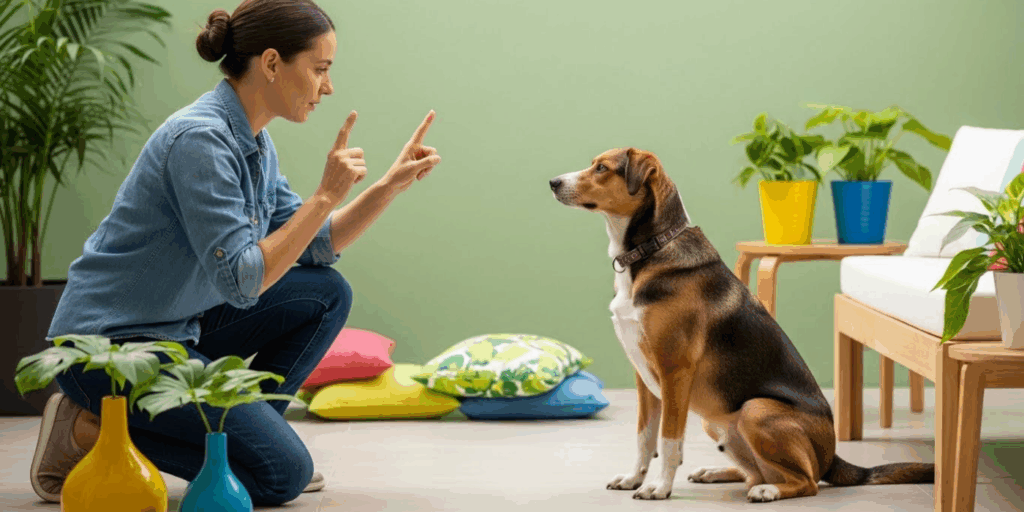
You’ve probably seen videos of trainers clicking clickers and waving treats like magic wands. But here’s the truth: you don’t need fancy gear or expensive tools to teach your dog to sit. All you need is your hands, your voice, and a little bit of timing.
Here’s the foolproof, step-by-step method used by professional dog trainers—and moms, dads, college students, and retirees alike.
Step 1: Get Your Dog’s Attention
Stand in front of your dog, ideally in a quiet space with no distractions. Hold a small, tasty treat (think: bits of chicken, cheese, or store-bought training treats) right in front of his nose. Let him sniff it. Don’t give it to him yet. This isn’t bribery—it’s focus.
Pro tip: If your dog is distracted, gently tap your leg or make a soft kissing noise to get his eyes on you. Avoid yelling. Dogs respond better to calm energy.
Step 2: Lure Him Into Position
Slowly move the treat upward and slightly backward, over his head. As his nose follows the treat, his bottom will naturally lower to the ground. The moment his rear touches the floor—say “Sit!” clearly and happily. Then, immediately give him the treat and a big smile.
Why this works: Dogs naturally follow scent and movement. By moving the treat up and back, you’re guiding his body into the sitting position without pulling or forcing. It’s like gently leading him into the right pose—like a yoga instructor, not a drill sergeant.
Step 3: Repeat, Reward, Celebrate
Do this 5–10 times in one session. Keep it short—dogs have short attention spans. Two or three sessions a day, spread out over 10 minutes each, is better than one long, frustrating hour.
After a few days, start saying “Sit” before you move the treat. Then, as soon as he sits, reward him. Gradually phase out the treat lure—use just your hand motion, then just your voice.
Bonus hack: Once he’s got it, practice in different places—your kitchen, the backyard, even the park. Dogs don’t generalize well at first. What works in the living room might not work on the sidewalk. Consistency across environments builds true understanding.
And if you’re out of treats? No worries. Praise works too. A happy “Good sit!” with a belly rub or a quick game of tug can be just as motivating. The key is consistency—not the treat itself.
Avoid These 3 Common Mistakes (They’re Slowing You Down)
Let’s be real: training doesn’t always go smoothly. And when it doesn’t, it’s usually not because your dog is stubborn. It’s because we’re making the same mistakes over and over.
Here are the three most common errors—and how to fix them fast.
Mistake #1: Repeating “Sit” Over and Over
How many times have you said, “Sit… sit… SIT! SIT! SIT!” while your dog stares at you like you’ve lost your mind?
Here’s the problem: repetition without results teaches your dog to ignore you. It turns “Sit” into background noise.
Fix it: Say “Sit” once. Wait. If he doesn’t respond, gently guide him into position with the treat (as in Step 2), then reward. Then try again later. One clear cue, followed by help if needed, is far more effective than yelling.
Mistake #2: Rewarding Too Late
I once watched a man train his golden retriever. He said “Sit,” the dog sat… and then the man reached into his pocket, fumbled for a treat, opened the bag, grabbed one, and handed it over. By the time the treat arrived, the dog had already stood up again.
Fix it: Reward immediately. Like, literally the second his butt hits the floor. Delayed rewards confuse dogs. They don’t connect the action with the consequence. Use small, fast treats (pea-sized pieces work great), and keep them ready in your palm before you start.
Mistake #3: Training When You’re Frustrated
This one’s the silent killer.
If you’re stressed, tired, or annoyed, your dog feels it. And he won’t learn. He’ll just learn that “training time” = bad vibes.
Fix it: If you feel your patience thinning, stop. Take a breath. Go for a walk. Come back in 10 minutes. Training should feel joyful—for both of you. If it doesn’t, you’re doing it wrong.
Remember: Your dog isn’t trying to defy you. He’s trying to understand you. Slow down. Be kind. Celebrate tiny wins. Progress isn’t linear—and that’s okay.
Turn Training Into a Daily Ritual (And Watch Your Bond Grow)
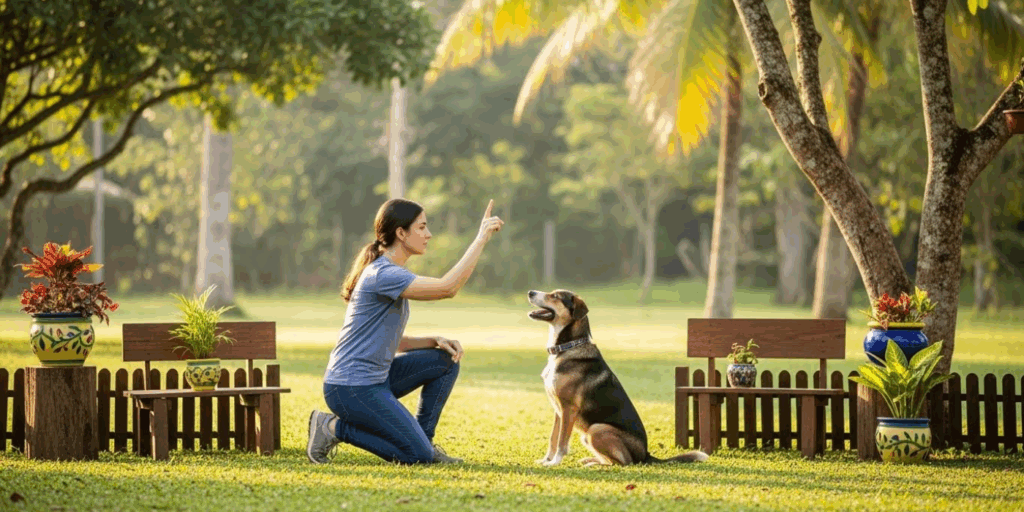
Here’s something most people don’t realize: training doesn’t have to be a separate activity. It can be woven into your everyday life.
Instead of thinking, “I need to train my dog for 15 minutes,” think: “I get to connect with my dog five times today.”
Try this:
- Before meals: Ask for a sit before placing his bowl down.
- Before going outside: Wait for a sit before opening the door.
- Before petting: Ask for a sit before giving belly rubs.
- Before car rides: Have him sit calmly while you buckle the leash.
Each of these moments is a tiny lesson. And each one reinforces that good things happen when he listens.
One dad I spoke to, Mike, started asking his 8-month-old lab, Scout, to sit before every single treat, every cuddle, every walk. Within two weeks, Scout stopped lunging at the door. He stopped jumping on guests. He even started waiting patiently at crosswalks.
“I didn’t change his behavior,” Mike said. “I changed how I interacted with him. And he changed right along with me.”
That’s the power of consistency. You’re not just teaching a command—you’re teaching trust.
And here’s the beautiful thing: your dog will start offering the sit on his own. You’ll be walking down the street, and he’ll suddenly sit, looking up at you like, “Did you forget? I’m supposed to sit now!” That’s when you know he’s not just obeying—he’s choosing to cooperate.
That’s connection.
That’s love.
What If My Dog Is Older, Shy, or Has a History of Trauma?
Maybe your dog is seven years old and has never sat on command. Maybe he was rescued from a shelter. Maybe he flinches at sudden movements. Maybe you’ve been told he’s “too old to learn.”
Here’s the truth: dogs never outgrow their ability to learn.
Neuroscience shows that dogs retain the ability to form new neural pathways throughout their lives. That means age doesn’t matter. Past trauma doesn’t define their future.
What matters is pacing.
If your dog is anxious, start even slower. Sit beside him on the floor. Let him come to you. Offer treats from your open palm. Don’t ask for a sit right away. Just build trust. One treat at a time.
Use a calm, soft voice. No sudden moves. No looming over him. Let him feel safe.
I worked with a senior beagle named Ruby who had spent years in a kennel. She hadn’t made eye contact with humans in over a year. Her owner, Carol, started by simply sitting quietly on the floor with a treat in her hand. No words. No pressure. Just presence.
After three days, Ruby licked Carol’s hand. On day five, she sat—just for a second—before darting away. Carol didn’t push. She just smiled and said, “Thank you.”
By week three, Ruby sat every time Carol said the word.
Old dogs don’t just learn—they heal.
If your dog has trauma, focus on safety first. Patience second. Training third. And remember: even one small moment of connection is a victory.
The Ripple Effect: How “Sit” Transforms Your Whole Relationship
Teaching your dog to sit doesn’t just make your life easier. It changes everything.
Think about it: when your dog sits calmly before you open the door, you don’t fear guests coming over. When he sits while you put on his leash, walks become peaceful—not exhausting. When he waits for permission before jumping on the couch, your home feels more like a sanctuary than a zoo.
But beyond the practical benefits, there’s something deeper happening.
Every time your dog sits on command, he’s learning that he has control over his impulses. And that’s huge. Dogs, like humans, thrive when they feel understood and respected.
You’re not just teaching a behavior. You’re building confidence. Reducing anxiety. Strengthening communication.
And in return, your dog gives you something priceless: his trust.
I’ve seen it over and over. A dog who used to bark at every passing car learns to sit and wait. A dog who used to bolt out the door now looks to his owner for guidance. A dog who used to cower in corners now sits proudly, tail wagging, waiting for his next cue.
That’s not obedience.
That’s partnership.
Ready to Start? Here’s Your Simple 7-Day Plan
You don’t need to overhaul your life. Just follow this easy plan:
- Day 1–2: Practice 5 reps, 2x a day. Use treats. Say “Sit” once. Reward immediately.
- Day 3–4: Add the cue before the lure. Wait a second before guiding. Reward even if it’s not perfect.
- Day 5: Try in a new location (backyard, front porch). Keep sessions short.
- Day 6: Phase out the treat lure. Use just your hand motion + voice.
- Day 7: Practice “Sit” before every meal, walk, and cuddle. Celebrate every success—even the small ones.
That’s it. Seven days. Less than 10 minutes a day. And you’ll have a dog who sits on command.
No clickers. No shock collars. No complicated charts. Just you, your dog, and a few tasty bites.
Final Thought: You’re Not Training a Dog. You’re Building a Friend.
Teaching your dog to sit isn’t about control.
It’s about connection.
It’s about saying, “I see you. I’m here. Let’s learn together.”
Every time you ask your dog to sit, you’re offering him a choice: Do you want to listen? Do you want to trust me?
And when he sits—really sits—you’re not just getting a well-behaved pet.
You’re gaining a partner.
A companion.
A quiet, wagging-little-heart who chose you.
So go ahead. Grab a treat. Kneel down. Say “Sit.”
And watch the magic happen.
Because the best things in life don’t require perfection.
They just require presence.
Your Turn:
Have you taught your dog to sit? What was your biggest “aha!” moment? Or maybe you’re just starting out—what’s one thing you’re nervous about?
Drop a comment below. I read every one. And if this guide helped you—even just a little—please share it with someone who’s struggling with their pup. Because every dog deserves to feel understood.
And every owner deserves to feel proud.
Now go on… your dog’s waiting. 🐶💛

Lucas Neto is a passionate animal enthusiast who has spent years learning, caring, and connecting with pets of all kinds. His fascination with animals began in childhood and grew into a lifelong dedication to understanding their behavior, needs, and unique personalities. Whether rescuing strays, supporting responsible pet care, or simply enjoying the everyday joy that animals bring, Lucas is committed to sharing his knowledge and love for pets with others.